

This day in 1974 The Opry moved from the Ryman to The Opry House. Opry Fun Facts!

The Heart of Country Music: From the Ryman to the Grand Ole Opry House
Few places hold as much history and heart in country music as the Grand Ole Opry. On March 16, 1974, the Opry moved from the Ryman Auditorium to the Grand Ole Opry House—not just a change of venue, but the next chapter in the story of the most legendary stage in country music. And while the Opry has evolved, it has never lost its soul.

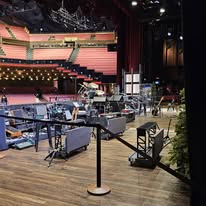
 One of the most cherished traditions that made the journey from the Ryman to the Opry House is the six-foot circle of wood embedded into the stage. Cut from the original Ryman stage, this circle is where country legends have stood for decades. Hank Williams, Johnny Cash, Patsy Cline, Dolly Parton—the ghosts of country music history live in that wood. Every time a new artist steps onto it for the first time, they stand in the very footprints of the greats. That circle is more than a piece of flooring—it’s a rite of passage.
A Stage That Weathered the Storm
The Grand Ole Opry House has endured more than just time—it has withstood nature itself. In 2010, the devastating Nashville flood left the Opry House under several feet of water. Today, you can still see the waterline on the wall backstage—a subtle but powerful reminder of the resilience of the Opry and country music itself. When the water receded, the heart of the Opry remained, and just like the artists who take its stage, it proved that nothing could wash away its spirit.

The Pinnacle of a Country Artist’s Career
Ask any country artist what their biggest career milestone is, and most won’t talk about awards or record sales. Instead, they’ll tell you that being invited to become a member of the Grand Ole Opry is the greatest honor of all. Membership isn’t something you can buy, campaign for, or even be vouched into by fellow members. The decision lies solely with the Opry’s management, making each invitation a deeply personal and well-earned achievement.
Every Opry member also has a mailbox at the Opry House. Yes, a literal mailbox, located at:
Grand Ole Opry House
2804 Opryland Drive
Nashville, TN 37214
Fans can send letters, and occasionally, artists pick up their own mail—a small but meaningful tradition that underscores just how connected country music is to its fans.

No Red Carpets, Just Real People
One of the most eye-opening parts of our backstage tour of the Opry House and WSM studios was seeing just how unpretentious the world of country music truly is. The staff entrance, the same one where country music legends enter, is as ordinary as any workplace door. If a punch clock were hanging on the wall, it wouldn’t feel out of place. Unlike other music genres, where artists arrive in black SUVs and step onto red carpets, country stars enter the Opry House just like any other worker showing up for their job.
That’s what makes country music special. There’s no elitism, no separation between the artists and their audience. The Opry feels intimate, despite seating over 4,000 people. The connection between the stage and the crowd is something that other genres could never replicate.
Playing for the Love of Country Music
If you think artists perform at the Opry for the paycheck, think again. While headlining acts at major venues can command six- or even seven-figure sums, a performance at the Opry pays a modest sum—around $140 per appearance. That’s right—artists who could sell out stadiums for millions of dollars still take the Opry stage for less than the price of a front-row seat at some concerts. Why? Because it’s not about the money—it’s about the love of country music, the tradition, and the honor of being part of something bigger than themselves.

More Than a Venue, a Legacy
The Grand Ole Opry isn’t just a place; it’s a living, breathing testament to country music’s past, present, and future. Walking through its backstage halls, standing in the circle, and witnessing the authenticity of the artists who call it home is proof that country music is more than just a genre—it’s a way of life.

And as long as that circle remains on the stage, country music will always have a home.


